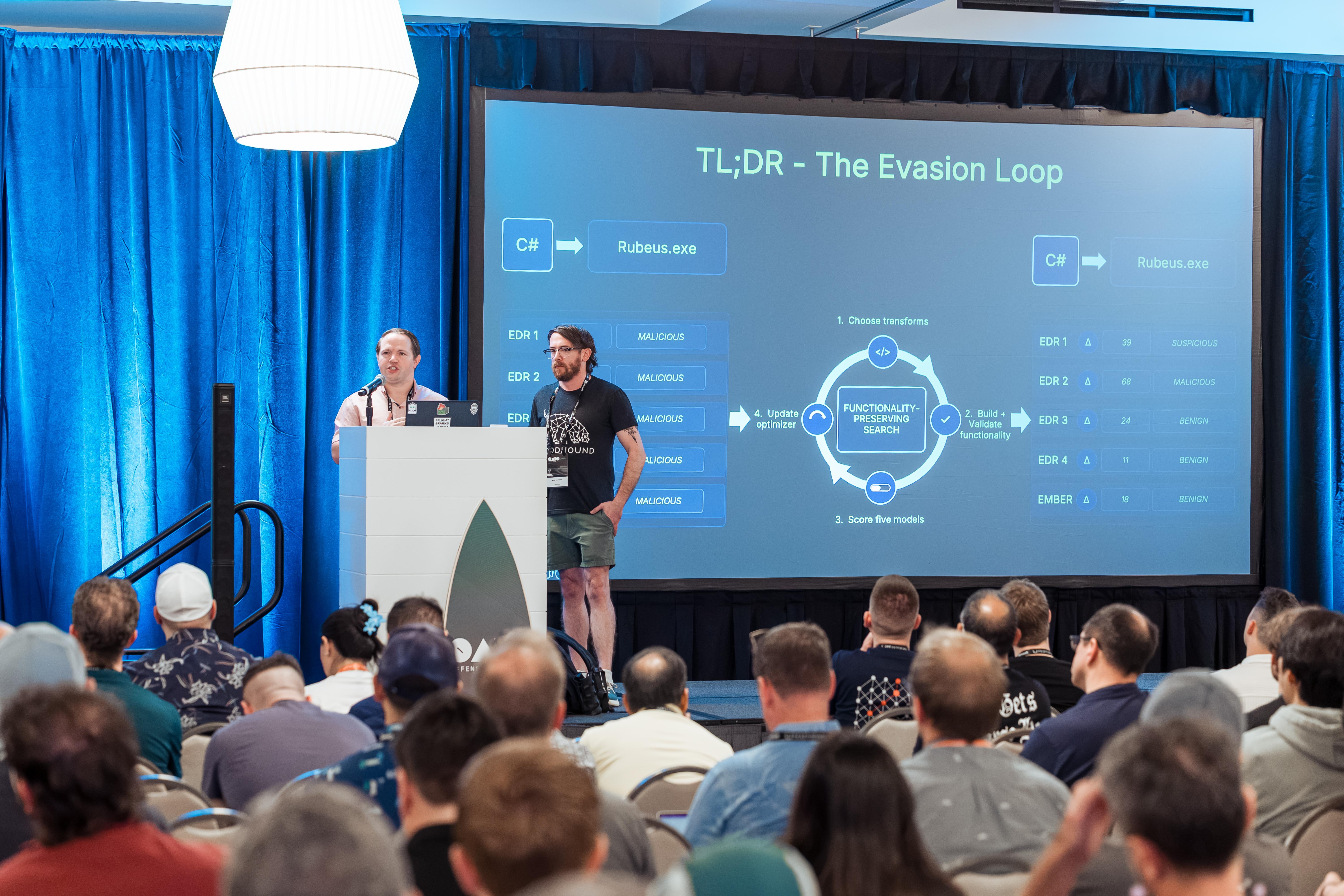
Orion - fuzzing workflow automationSlides
PUBLIC RESEARCH
Vulnerability research & fuzzing
Orion - fuzzing workflow automation
Max Bazalii, Marius Fleischer
fuzzing / automation / LLMs
Resources published by the conference or speaker.

OAIC / Public research collection
Talks, slides, and ideas advancing the next wave of offensive AI.
Explore the collectionMany talks are withheld from this archive at the authors’ request due to the sensitivity of the research.
Explore the materials speakers have chosen to make public. Selected 2026 recordings are available now; the full session archive is forthcoming.
Max Bazalii, Marius Fleischer
fuzzing / automation / LLMs
Resources published by the conference or speaker.
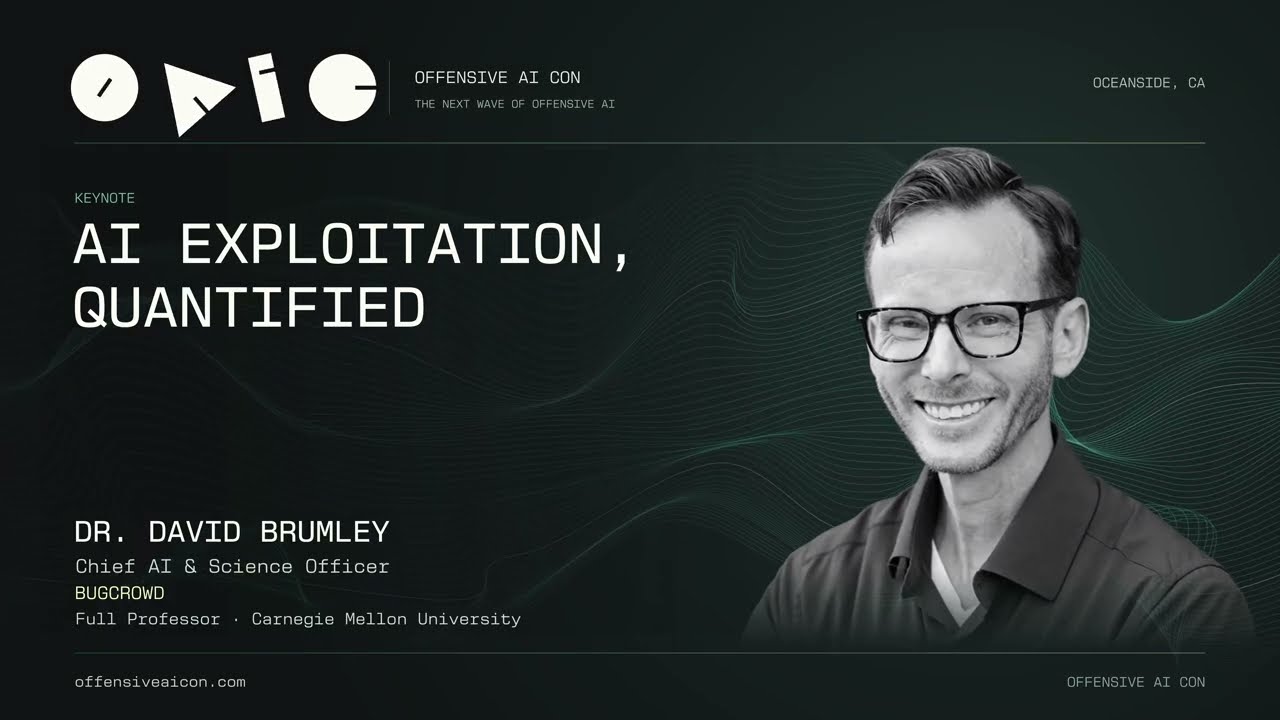
Ruikai Peng, Olivier Laflamme
taint analysis / reasoning / LLMs
Resources published by the conference or speaker.
Vic Fernandez III
adversary emulation / exercises / HADES
Resources published by the conference or speaker.
Jimmy (Jiun-Ming) Su, Maxim Shih
Active Directory / MCP / attack paths
Resources published by the conference or speaker.
Kurtis Shelton
API security / agents / verification
Resources published by the conference or speaker.
Daria Bahrami
policy / strategy / AI
Resources published by the conference or speaker.
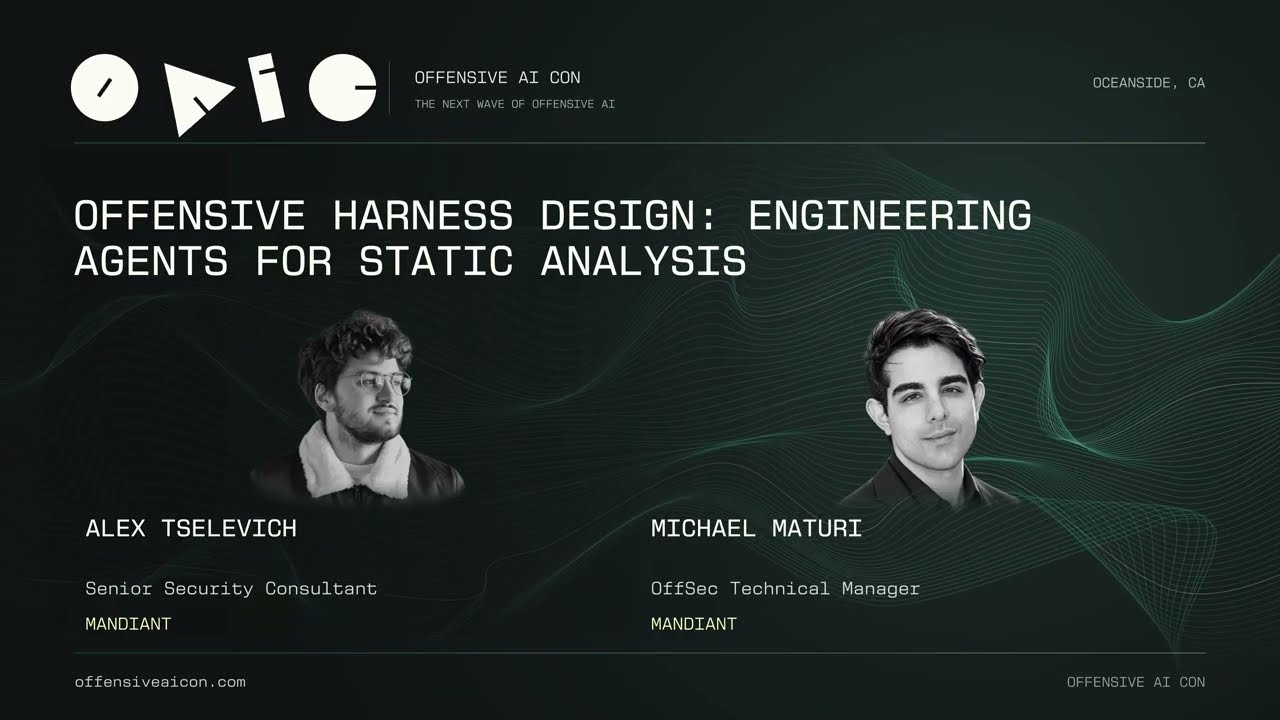
Alex Tselevich, Michael Maturi · Mandiant
Mandiant’s Alex Tselevich and Michael Maturi share practical lessons from building agentic harnesses for static analysis, covering threat modeling, lead selection, context and token management, orchestration, deduplication, validation, and benchmarks.
Full presentation and audience Q&A · 1:01:17

Gaspard Baye, Ph.D. · Valix AI
Gaspard Baye examines how offensive agents search for command-policy bypasses, and why bypassing a filter differs from escaping a capability sandbox. Using SandBench, supervised fine-tuning and reinforcement learning, he compares defenses, analyzes reward-design pitfalls, and explores Bayesian attack graphs as a next step.
Full presentation and audience Q&A · 27:02

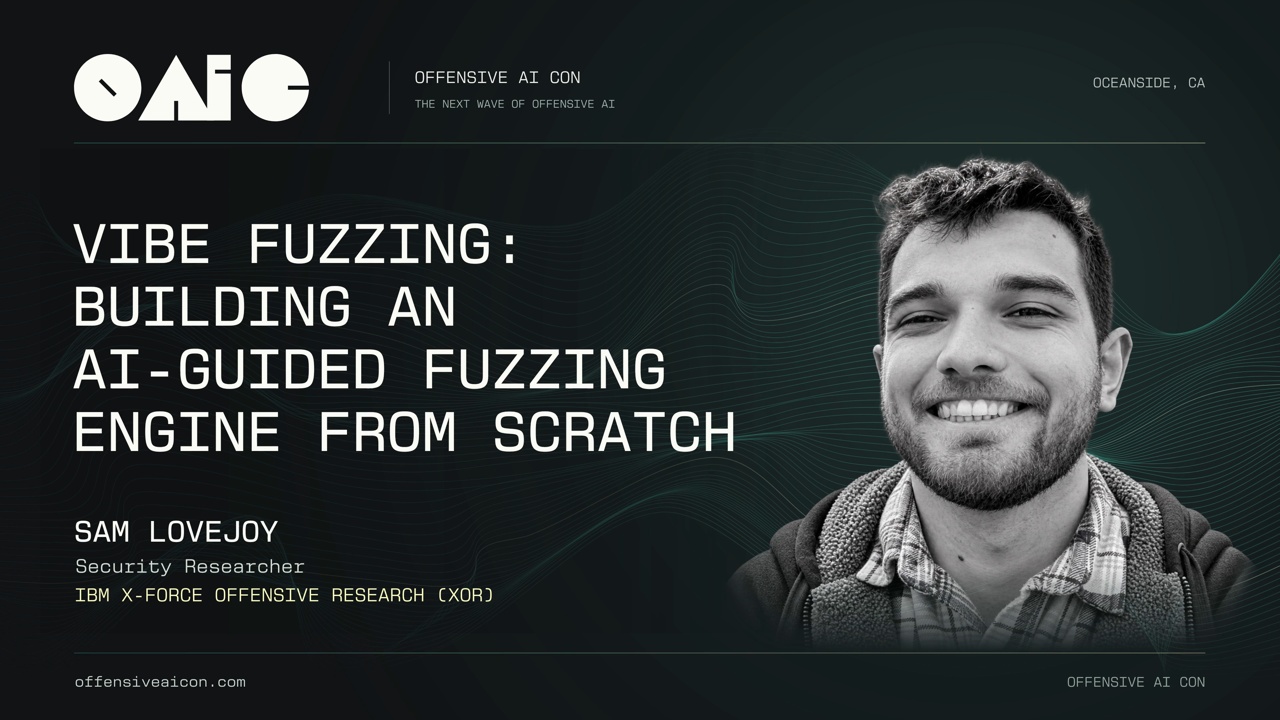
Sam Lovejoy · IBM X-Force Offensive Research
Sam Lovejoy of IBM X-Force Offensive Research explains how VF3 combines graph-based input generation, state-aware fuzzing, and LLM guidance to target code and patches while keeping the fuzzing loop fast. He covers Markov-chain grammars, program state, model context, performance, and cost, followed by a live demonstration and audience Q&A.
Full presentation and audience Q&A · 30:11

Aaron Grattafiori · Umbriel
Aaron Grattafiori of Umbriel explores how LLMs can uncover incomplete fixes and related bug variants by studying a target’s history. He walks through a practical pipeline for research, patch review, variant discovery, triage, and validation, with examples and lessons on cost and reliability.
Full presentation · 25:22
No research matches these filters. Try another speaker or topic.
The full collection of talk videos and slides is forthcoming.
Selected recordings are available in the collection above.
Topic groups are editorial navigation categories. The archive contains currently verified public resources and does not represent the full conference programme.

Conversations / OAIC 2026
Interviews recorded live at Offensive AI Con with Ryan Naraine and Juan Andres Guerrero-Saade.
Three Buddy Problem on YouTube
Valentina Palmiotti (chompie)Vulnpocalypse, Matching Mythos on a BudgetValentina discusses her autonomous Windows kernel exploit pipeline, Pwn2Own research, model limitations, and the gap between vulnerability discovery and exploitation.
Katie MoussourisAI-as-malware, the monitoring gap, and an NTSB for AIKatie discusses AI incident accountability, security monitoring, and the case for an independent investigation board.
Ollie WhitehouseThe Biggest Correction of Technical Debt EverOllie discusses preparations for an AI-driven patch wave, model evaluation, and better observability for edge devices.
Aaron GrattafioriHow LLMs Hunt Patch Variants at ScaleAaron discusses patch variant analysis with LLMs, exploit verification, and the changing economics of offense and defense.
Joel TodoroffHow Offensive AI Is Rewiring Western Government OpsJoel discusses how AI is changing reconnaissance and targeting, the work before exploitation, and the constraints facing operational users.